Skip to content


You look at the clock and wonder how much time until 1:30 PM. Maybe you have a meeting, a class, a call, or a lunch break. The answer depends on the time right now. If it is 10:45 AM, you have 2 hours and 45 minutes left. If it is 12:00 PM, you have 1 hour and 30 minutes left.
This guide shows you how to find the exact answer every time. You will learn quick tools, a simple formula, and easy mental tricks. You will also see ready-made tables, time zone tips, and common mistakes to avoid.
The Quick Answer
To find the time left until 1:30 PM, follow this rule:
Subtract your current time from 13:30.
That is all. 1:30 PM is written as 13:30 on a 24-hour clock. So the math is simple once you use that format.
Here are a few fast examples:
- At 9:30 AM, you wait 4 hours.
- At 11:00 AM, you wait 2 hours and 30 minutes.
- At 12:30 PM, you wait 1 hour.
- At 1:15 PM, you wait 15 minutes.
If the clock already shows a time after 1:30 PM, the next 1:30 PM is tomorrow. You will learn how to handle that case later in this guide.
Fastest Ways to See the Time Left
You do not always need to calculate by hand. Several tools do the work for you in seconds.
Use a Live Countdown Timer
A live countdown timer is the easiest option. Search for “countdown to 1:30 PM” and open a countdown page. The page reads your device clock. It then shows the hours, minutes, and seconds left. The numbers change every second, so you can leave the page open and watch.
Good countdown pages also pick the next 1:30 PM for you. If 1:30 PM has passed today, they count to tomorrow. You do not need to change anything.
Many free tools add useful extras. Some, like PixelTools, run in your browser with no account. They can play a sound when time is up and open in full screen for a second monitor or a TV. You can also copy a link and share it. The link follows each viewer’s own clock, so everyone sees the right time for their time zone.
Well-built timers do not just add up ticks. They read your device clock many times each second. That keeps the numbers correct even when the tab runs in the background.
Use a Time Until Calculator
A time until calculator is a bit more flexible. You enter a target time or date. The tool then tells you how much time remains until that moment. You can use it for 1:30 PM today, 1:30 PM next Friday, or any other time. This is useful when your deadline is not today.
TimeUntil.net is one example. It has a page for every hour from 12 AM to 11 PM. It also counts down to events such as New Year, Christmas, Halloween, and Easter. Its timer shows milliseconds along with hours, minutes, and seconds. Some people search for “time till” and others search for “time until.” Both mean the same thing.
Set an Alarm on Your Phone
An alarm is a smart choice when you do not want to watch the clock. Open the Clock app and set an alarm for 1:30 PM. Your phone will alert you at the right moment. You can also set one a few minutes early. For example, set it for 1:20 PM to give yourself ten minutes to get ready.
A calendar alert works well too. In Google Calendar or Outlook, add a notification to your event, so you never rely on memory. A phone timer is another simple choice. Enter the hours and minutes you worked out, and let it run.
Ask a Voice Assistant
Siri, Google Assistant, and Alexa can all help. You can say, “Set an alarm for 1:30 PM.” You can also ask, “What time is it?” and do the quick math yourself. Voice tools are handy when your hands are busy.
Use a Clock on Your Computer
Your computer shows the time in the corner of the screen. For a bigger display, you can open a world clock or a full-screen clock page. These work well in a classroom or an office. Everyone can see the time without asking.
How to Calculate the Time Until 1:30 PM by Hand
Sometimes you have no internet. Sometimes you just want to understand the math. Here are three easy methods. Pick the one that feels most natural.

Method 1: The 24-Hour Clock Method
This is the most reliable method.
1: Write your current time in 24-hour format.
- Times from 12:00 AM to 12:59 AM become 00:00 to 00:59.
- Times from 1:00 AM to 11:59 AM stay the same.
- Times from 12:00 PM to 12:59 PM stay the same.
- Times from 1:00 PM to 11:59 PM add 12 hours. For example, 3:15 PM becomes 15:15.
2: Subtract your time from 13:30.
3: If you must borrow, remember that one hour has 60 minutes.
Example: It is 9:20 AM.
- 30 minutes minus 20 minutes is 10 minutes.
- 13 hours minus 9 hours is 4 hours.
- The answer is 4 hours and 10 minutes.
Example with borrowing: It is 7:45 AM.
- 30 minutes is less than 45 minutes, so borrow one hour.
- 13:30 becomes 12:90.
- 12:90 minus 7:45 is 5:45.
- The answer is 5 hours and 45 minutes.
Method 2: The Minutes Method
This method turns everything into minutes. It works well with a calculator.
1:30 PM is 810 minutes after midnight. Here is why: 13 hours times 60 is 780. Add 30 more minutes to get 810.
1: Change your current time into minutes after midnight.
2: Subtract that number from 810.
3: Change the result back into hours and minutes.
Example: It is 9:20 AM.
- 9 hours times 60 is 540.
- 540 plus 20 is 560 minutes.
- 810 minus 560 is 250 minutes.
- 250 divided by 60 is 4 with 10 left over.
- The answer is 4 hours and 10 minutes.
You get the same result as Method 1. That is a good way to double-check your work.
Method 3: The Count-Up Method
This method needs no subtraction. You simply count forward in steps.
1: Count to the next full hour.
2: Count the hours until you reach 1:00 PM.
3: Add the last 30 minutes.
Example: It is 10:40 AM.
- From 10:40 to 11:00 is 20 minutes.
- From 11:00 to 1:00 PM is 2 hours.
- From 1:00 to 1:30 is 30 minutes.
- Add them: 20 minutes plus 2 hours plus 30 minutes is 2 hours and 50 minutes.
Many people find this method the easiest to do in their heads.
More Worked Examples
Practice makes the math feel easy. Here are more examples from different parts of the day.
Early morning: 12:10 AM This is 00:10 on a 24-hour clock. Subtract it from 13:30. The result is 13 hours and 20 minutes.
Morning: 8:00 AM 13:30 minus 8:00 is 5 hours and 30 minutes.
Late morning: 11:50 AM 13:30 minus 11:50 is 1 hour and 40 minutes. You can also count up: 10 minutes to noon, then 1 hour and 30 minutes more. That adds up to 1 hour and 40 minutes.
Noon: 12:00 PM This one is easy. You wait 1 hour and 30 minutes.
Early afternoon: 1:05 PM You wait 25 minutes.
Before dawn: 4:30 AM This is 04:30. Subtract it from 13:30. You wait exactly 9 hours.
Mid-morning: 10:50 AM 30 minutes is less than 50 minutes, so borrow one hour. 13:30 becomes 12:90. Then 12:90 minus 10:50 is 2:40. You wait 2 hours and 40 minutes.
After 1:30 PM: 3:15 PM This is 15:15. If you subtract it from 13:30, you get a negative number: minus 1 hour and 45 minutes. A negative number means 1:30 PM has passed. Add 24 hours to find the time until tomorrow’s 1:30 PM.
- Minus 1:45 plus 24:00 equals 22 hours and 15 minutes.
So at 3:15 PM, you wait 22 hours and 15 minutes for the next 1:30 PM.
Evening: 6:19 PM This is 18:19. Subtract it from 13:30 to get minus 4 hours and 49 minutes. Add 24 hours. The answer is 19 hours and 11 minutes.
Middle of the night: 1:00 AM This is 01:00. Subtract it from 13:30. You wait 12 hours and 30 minutes.
Quick Reference Table: Time Until 1:30 PM
Use this table when you need a fast answer. Find your current time in the left column. The right column shows the time left until the next 1:30 PM.
| Current Time | Time Until 1:30 PM |
|---|---|
| 12:00 AM (midnight) | 13 hours 30 minutes |
| 1:30 AM | 12 hours |
| 3:00 AM | 10 hours 30 minutes |
| 5:00 AM | 8 hours 30 minutes |
| 6:00 AM | 7 hours 30 minutes |
| 7:30 AM | 6 hours |
| 8:00 AM | 5 hours 30 minutes |
| 9:00 AM | 4 hours 30 minutes |
| 10:00 AM | 3 hours 30 minutes |
| 10:45 AM | 2 hours 45 minutes |
| 11:00 AM | 2 hours 30 minutes |
| 11:30 AM | 2 hours |
| 12:00 PM (noon) | 1 hour 30 minutes |
| 12:30 PM | 1 hour |
| 1:00 PM | 30 minutes |
| 1:15 PM | 15 minutes |
| 1:30 PM | It is 1:30 PM now |
| 2:00 PM | 23 hours 30 minutes |
| 3:00 PM | 22 hours 30 minutes |
| 6:00 PM | 19 hours 30 minutes |
| 8:00 PM | 17 hours 30 minutes |
| 10:00 PM | 15 hours 30 minutes |
| 11:30 PM | 14 hours |
Save this page or take a screenshot. You can then check the answer even when you are offline.
What Happens After 1:30 PM Passes?
Many people get stuck here. They subtract and get a negative number. Do not worry. A negative result has a clear meaning: today’s 1:30 PM is over.

To find the time until tomorrow’s 1:30 PM, use this simple fix:
Add 24 hours to the negative result.
Or, in minutes, add 1,440. A full day has 1,440 minutes.
Example: It is 4:00 PM.
- 4:00 PM is 16:00.
- 13:30 minus 16:00 is minus 2 hours and 30 minutes.
- Add 24 hours: 21 hours and 30 minutes.
You can check this with the count-up method. From 4:00 PM to midnight is 8 hours. From midnight to 1:30 PM is 13 hours and 30 minutes. Add them to get 21 hours and 30 minutes.
If you only care about today, you can simply say that 1:30 PM has already passed. If you are planning ahead, use the next-day answer.
How Much Time Has Passed Since 1:30 PM?
Sometimes you need to look back, not ahead. You may ask how much time has passed since 1:30 PM. The idea is the same. This time, you subtract 13:30 from your current time.
- At 3:15 PM (15:15), it has been 1 hour and 45 minutes.
- At 6:00 PM (18:00), it has been 4 hours and 30 minutes.
- At 11:00 PM (23:00), it has been 9 hours and 30 minutes.
If it is before 1:30 PM now, the last 1:30 PM was yesterday. Add 24 hours to the negative result. At 10:45 AM, 10:45 minus 13:30 is minus 2 hours and 45 minutes. Add 24 hours, and you get 21 hours and 15 minutes since yesterday’s 1:30 PM.
Turning the Time Into Minutes and Seconds
Some people want more detail than hours. Maybe you run a timer, a test, or a small event. Here is how to convert the time left.
Minutes
Multiply the hours by 60 and add the extra minutes.
- 2 hours and 45 minutes is 165 minutes.
- 1 hour and 30 minutes is 90 minutes.
- 4 hours and 10 minutes is 250 minutes.
Seconds
Multiply the minutes by 60.
- 90 minutes is 5,400 seconds.
- 165 minutes is 9,900 seconds.
- 30 minutes is 1,800 seconds.
You can also use this fixed number: 1:30 PM is 48,600 seconds after midnight. To see how many seconds until 1:30 today, follow these steps:
- Change your current time into seconds after midnight.
- Subtract that number from 48,600.
Example: It is 12:00 PM.
- Noon is 43,200 seconds after midnight.
- 48,600 minus 43,200 is 5,400 seconds.
- That matches 1 hour and 30 minutes.
Here are some handy facts to remember:
- 1 minute has 60 seconds.
- 1 hour has 3,600 seconds.
- 1 day has 86,400 seconds.
Other Nearby Times
People often ask about times close to 1:30 PM. The same method works for all of them. You only change the target.
- 1:00 PM (13:00): This is 30 minutes earlier than 1:30 PM. If it is 11:00 AM, you wait 2 hours until 1:00 PM. That is how to find how many hours until 1 PM today.
- 1:20 PM (13:20): This is 10 minutes earlier. At 12:00 PM, you wait 1 hour and 20 minutes.
- 1:30 AM (01:30): This is in the middle of the night. At 10:00 PM, you wait 3 hours and 30 minutes.
Two more targets come up often.
- 12:30 PM (12:30): This is one hour earlier than 1:30 PM. If you ask how long until 12:30 PM at 10:45 AM, you wait 1 hour and 45 minutes.
- 15:30 (3:30 PM): Some people write this as 1530. It is 24-hour time for 3:30 PM. At 10:45 AM, you wait 4 hours and 45 minutes.
To find how many minutes until 1 PM today, subtract your minutes after midnight from 780.
For any target, convert it to 24-hour time and subtract the current time. If you use the minutes method, 1:00 PM is 780 minutes, 1:20 PM is 800 minutes, and 1:30 AM is 90 minutes.
If someone asks “how much longer till 1 PM,” you can answer fast. Take your countdown to 1:30 PM and remove 30 minutes.
How Long Is 1200 Minutes?
Sometimes the wait is given in minutes, not hours. Divide by 60 to convert it.
- 1200 minutes divided by 60 is 20 hours.
- 20 hours is less than one day. It is about 0.83 of a day.
- In seconds, 1200 minutes is 72,000 seconds.
This helps when you plan ahead. Say it is 5:30 PM. Add 20 hours, and you reach 1:30 PM the next day. So at 5:30 PM, 1200 minutes is exactly the wait until tomorrow’s 1:30 PM.
Do Not Mix Up 1:30 PM and 1:30 AM
This is one of the most common mistakes. It can shift your answer by 12 hours.
- 1:30 AM is 01:30. It happens in the middle of the night.
- 1:30 PM is 13:30. It happens in the afternoon, soon after lunch time.

Here is how the same starting time changes the answer. Say it is 10:00 PM.
- Time until 1:30 AM: 3 hours and 30 minutes.
- Time until 1:30 PM: 15 hours and 30 minutes.
That is a big difference. Always check AM and PM before you count. If a countdown page shows an unexpected answer, you may have picked the wrong one.
The two times also serve different needs. 1:30 AM is common for late-night shifts and early flights. 1:30 PM is common for meetings, classes, and appointments.
What AM and PM Mean
AM stands for “ante meridiem,” which is Latin for “before midday.” PM stands for “post meridiem,” which means “after midday.” So 1:30 AM comes before noon, and 1:30 PM comes after noon. This one label decides whether you wait a few hours or half a day.
The Noon and Midnight Trap
Noon and midnight confuse many people. Here is a simple guide.
- 12:00 PM is noon. It is the middle of the day.
- 12:00 AM is midnight. It is the start of the day.
- 12:30 PM is half an hour after noon. It is 12:30 on a 24-hour clock.
- 12:30 AM is half an hour after midnight. It is 00:30 on a 24-hour clock.
If you see 12:30 and think it is the middle of the night, your math will be off. Remember that PM times start again at 12, not at 1.
Use the 24-Hour Clock to Avoid Errors
The 24-hour clock removes AM and PM confusion. Each hour has its own number from 0 to 23. So 1:30 PM is always 13:30, and 1:30 AM is always 01:30. Many countries and many industries use this format every day. It is also common in military, aviation, and healthcare. If you often count down to a time, switch your phone to 24-hour display. You will make fewer mistakes.
12-Hour and 24-Hour Clocks Side by Side
Both clocks show the same moment. They only write it in a different way.
| Feature | 12-hour clock | 24-hour clock |
|---|---|---|
| 1:30 in the afternoon | 1:30 PM | 13:30 |
| Needs AM or PM | Yes | No |
| Common use | Daily speech and many phone clocks | Timetables, aviation, military, and healthcare |
If you switch between the two, add 12 to any PM hour (except 12 PM) to get the 24-hour time.
Different Ways to Say and Write 1:30 PM
People describe the same time in several ways.
- Spoken: “half past one” or “one thirty.”
- Written: 1:30 PM, 1:30 p.m., or 13:30.
- Compact: 1330, which is common in schedules and military style.
Watch out for look-alikes. 1330 is 1:30 PM, but 1530 is 3:30 PM. One digit changes the answer by two hours.
How Time Zones Change the Answer
1:30 PM is a local time. It belongs to a place. When you say “1:30 PM,” you must know which time zone you mean. Two people in different countries can ask the same question and get different answers.
Pakistan and India
Pakistan Standard Time (PKT) is UTC+5. India Standard Time (IST) is UTC+5:30. India is 30 minutes ahead of Pakistan.
- When it is 1:30 PM in Pakistan, it is 2:00 PM in India.
- When it is 1:30 PM in India, it is 1:00 PM in Pakistan.
Now imagine you live in Pakistan and a friend in India says, “Call me at 1:30 PM.” You must first change that time into your own clock. Their 1:30 PM is 1:00 PM for you.
Example: It is 10:45 AM in Pakistan.
- The time in India is 11:15 AM.
- India’s 1:30 PM is 2 hours and 15 minutes away.
- In Pakistan, that moment is 1:00 PM. From 10:45 AM to 1:00 PM is also 2 hours and 15 minutes.
Both ways give the same answer. This is a good way to check your work.
Some Other Common Time Zones
Here is what 1:30 PM Pakistan time looks like in a few other places. These examples use standard time, so check the date if daylight saving time applies.
| Place | Time Zone | When It Is 1:30 PM in Pakistan |
|---|---|---|
| India | UTC+5:30 | 2:00 PM |
| United Arab Emirates | UTC+4 | 12:30 PM |
| Saudi Arabia | UTC+3 | 11:30 AM |
| United Kingdom (GMT, winter) | UTC+0 | 8:30 AM |
| New York (winter) | UTC-5 | 3:30 AM |
Daylight saving time can move these numbers by one hour. Some countries change their clocks in spring and autumn. Others never do. If your meeting is in a country that changes its clocks, check a reliable world clock before the event.
Simple Steps for Cross-Time-Zone Plans
- Find the time zone of the event.
- Find your own time zone.
- Work out the difference in hours.
- Change the event time into your local time.
- Count down to that local time.
A good countdown tool uses your device’s time zone automatically. That removes steps 2 to 4. It is also wise to write the time zone next to the time when you invite others. For example, write “1:30 PM Pakistan time” instead of only “1:30 PM.”
Developers often use Coordinated Universal Time (UTC) and the ISO 8601 date and time format. The United Kingdom uses Greenwich Mean Time (GMT) in winter, which matches UTC+0. Computers also store time as a Unix timestamp, which counts seconds from a fixed starting point. You do not need these for daily use. They do explain why your device clock and time zone settings matter, because every countdown reads from that clock. Your operating system also adjusts the clock for daylight saving time.
Mental Math Tricks for Quick Answers
You do not need a tool for every case. A few tricks will help you answer fast.
Trick 1: Count to Noon First
Noon is an easy checkpoint. 1:30 PM is exactly 1 hour and 30 minutes after noon. So find the time until noon, then add 1 hour and 30 minutes.
Example: It is 9:40 AM. Noon is 2 hours and 20 minutes away. Add 1 hour and 30 minutes. The answer is 3 hours and 50 minutes.
Trick 2: Count to 1:00 PM, Then Add 30
Find the time until 1:00 PM and add half an hour. This is useful when your current time is close to the hour.
Example: It is 11:55 AM. Until 1:00 PM is 1 hour and 5 minutes. Add 30 minutes. The answer is 1 hour and 35 minutes.
Trick 3: Round, Then Adjust
Round your current time to the nearest half hour. Count to 1:30 PM. Then adjust.
Example: It is 10:12 AM. Round to 10:00 AM. The gap to 1:30 PM is 3 hours and 30 minutes. You are 12 minutes past 10:00 AM, so subtract 12 minutes. The answer is 3 hours and 18 minutes.
Trick 4: Use the Half-Hour Pattern
1:30 PM falls on a half hour. If your current time also falls on a half hour, the answer is always a whole number of hours. If your current time falls on a full hour, the answer always ends in 30 minutes.
- At 8:30 AM, you wait 5 hours.
- At 9:00 AM, you wait 4 hours and 30 minutes.
This pattern is a fast way to catch mistakes.
Counting Down to a Date, Not Just a Time
Sometimes your question is bigger than one afternoon. You may want to know how much time is left until a date, such as the 13th of next month or a trip day. The idea is the same, but you count days first.
Step 1: Count the full days between today and the target date.
Step 2: Add the hours and minutes left until the target time on that date.
Example: Today is the 10th of the month at 10:45 AM. Your event is on the 13th at 1:30 PM.
- From the 10th at 10:45 AM to the 13th at 10:45 AM is 3 days.
- From 10:45 AM to 1:30 PM is 2 hours and 45 minutes.
- The total is 3 days, 2 hours, and 45 minutes.
Say you want to know how much time till 13 August. Count the full days from today to that date. Then add the hours and minutes left until your target time on that day.
If you do this often, use a date countdown calculator. These tools handle month lengths and leap years for you. That is helpful because months have 28, 29, 30, or 31 days.
Why People Ask How Much Time Is Left Until 1:30 PM
People check this time for many reasons. Here are some common ones.

- Meetings and calls. Many online meetings start at half past the hour. A countdown helps you join on time.
- School and exams. Students may have a class, a test, or a pickup time after lunch.
- Work breaks. Some people plan lunch or a break around the middle of the day.
- Travel. A bus, train, or flight may leave at 1:30 PM. You need to know when to leave home.
- Deliveries and appointments. A courier, repair visit, or clinic slot may fall at 1:30 PM.
- Online events. Product launches, sales, and live streams often begin at a fixed time.
- Time zone planning. Remote teams and families abroad must match their clocks.
In each case, a quick answer saves stress. It also helps you plan what to do with the time you have.
People ask this question in many ways. Some ask how much time for 1:30 PM. Others ask what time is 1:30 PM, or how much time has passed since it. All of them rely on the same clock math.
1:30 PM also has a natural place in the day. It sits right after the midday break and falls about 56% of the way through the day. That makes it a common start time for afternoon classes, post-lunch meetings, doctor appointments, and shift changes. The 90 minutes between noon and 1:30 PM are often the busiest planning window. People eat lunch, run errands, and finish morning tasks. Many people also feel an energy dip in the early afternoon, so a clear plan for the next hour helps.
Tips to Never Miss 1:30 PM
A few simple habits will keep you on schedule.
Set More Than One Alarm
Set one alarm for 1:30 PM. And second alarm for 15 minutes earlier. The first alarm tells you to start getting ready. The second tells you to leave or join.
Check Your Device Time Zone
A wrong time zone causes wrong countdowns. Open your phone settings and turn on automatic time zone. This matters most when you travel. A phone in the wrong zone can be an hour off or more.
Add a Buffer
Plan to arrive 5 to 10 minutes early. Online meetings can have login problems. In-person trips can have traffic. A small buffer protects you from both.
Write the Time Zone in Invitations
When you share a time, add the place or zone. For example, write “1:30 PM Pakistan time.” This stops confusion for everyone who reads it.
Use a Visible Countdown
If you work on a computer, keep a countdown page open in a small window. A timer you can see helps you stay focused. You will not need to check the clock again and again.
Use the 24-Hour Format
As noted earlier, 13:30 cannot be mistaken for 1:30 AM. Many people find this simple change very helpful.
Make the Wait Feel Shorter
Time does not always feel the same as the clock says. When you are bored or anxious, minutes feel longer. When you are busy, they pass fast. You can make the wait easier in a few ways:
- Break it into small chunks, such as two 15-minute tasks.
- Use a visible timer, so you stop checking the clock.
- Fill the time with one small, useful task.
The clock is accurate, so trust the countdown.
Teach Children to Read 1:30
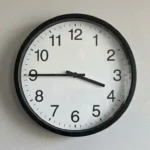
An analog clock is a good way to explain “half past one.” The short hour hand sits halfway between 1 and 2. The long minute hand points at 6. Ask the child how long it is until 1:30 at different times of the day. Counting forward on the clock face builds the same skill as the count-up method above.
Common Mistakes to Avoid
Even simple time math has traps. Watch out for these errors.
- Mixing AM and PM. This adds or removes 12 hours. Always check the label.
- Treating 60 like 100. Minutes run from 0 to 59. When you subtract, borrow 60, not 100.
- Forgetting the day change. If the time has passed, the next 1:30 PM is tomorrow.
- Ignoring time zones. A meeting in another country has a different local time.
- Forgetting daylight saving time. Clocks may shift by one hour in some places.
- Mixing up noon and midnight. 12:00 PM is noon. 12:00 AM is midnight.
- Relying on a wrong device clock. If your device is not set to the right time, every countdown will be off.
A quick check of these seven points solves most time errors.
Here is one slip to watch for. Some people work out 1:30 minus 12:50 as 0:80. That is wrong, because minutes stop at 59. The right answer is 40 minutes. From 12:50 to 1:00 is 10 minutes, and from 1:00 to 1:30 is 30 more.
Frequently Asked Questions
Subtract your current time from 13:30. At 11:00 AM, the answer is 2 hours and 30 minutes. A live countdown page gives the exact number, including seconds.
It depends on the current time. At 9:30 AM, it is 4 hours. At 12:30 PM, it is 1 hour.
Take 810 and subtract the minutes that have passed since midnight. At 12:00 PM, that is 810 minus 720, which is 90 minutes.
Use 48,600 as the target. Subtract your current time in seconds after midnight. At 1:00 PM, the answer is 1,800 seconds.
The countdown moves to tomorrow. Add 24 hours to the negative result. For example, at 2:00 PM, you wait 23 hours and 30 minutes.
It will be 1:30 PM when your clock reads 1:30 with a PM label, or 13:30 on a 24-hour clock. Use a countdown to see how far away that is.
It is 1 hour and 30 minutes, which equals 90 minutes.
Yes. Most countdown tools follow the clock on your device, so they count to 1:30 PM where you are. That clock also handles daylight saving changes.
It is 20 hours, or about 0.83 days. Divide the minutes by 60 for hours, or by 1,440 for days.
It is half past one in the afternoon. On a 24-hour clock, it is 13:30. It comes 12 hours after 1:30 AM.
Final Thoughts
Finding out how much time is left until 1:30 PM is easy once you know the steps. Convert the time to a 24-hour clock. Subtract your current time from 13:30. If the answer is negative, add 24 hours.
For the quickest and most exact result, use a live countdown timer. For planning, set an alarm and add a small buffer. If you work across countries, check the time zone before you count. A few smart habits will help you stay on time for every meeting, class, and appointment.

Laura Collins researches and writes practical content about sizes, dimensions, and everyday measurements. She enjoys turning confusing measurements into simple explanations and relatable comparisons, helping readers quickly understand how big, long, tall, or wide something really is.